


16 hours ago
(This is not a photo from the homeschool conference - just two of my kids on a recent hike.)
Last week my family and I attended our state homeschool conference. Every year I learn something new, find great curriculum deals, discover curriculum that is new to me, and leave encouraged.
I’ve written before about why you should attend a homeschool conference if you get a chance. I think I may do another version of that article someday about why you should attend a Christian homeschool conference, even if you don’thomeschool. If a homeschool conference is a good one, at least half of the sessions would be uplifting to any Christian family, and I love that about our local conference. The focus is on raising our children and discipling them, and then also practical/academic tips - but the meat of it is a biblical philosophy on child-rearing that would benefit any Christian parent.
I received a conference-recap email from one of the many homeschool blogs I follow, and I really enjoyed it and was inspired to share a few takeaways from the conference we attended (including some interesting curriculum finds).
My Main Takeaway
A big theme of our conference this year was passing on the faith to our children. If you are not aware, the statistics on youth leaving the church in Protestant denominations in the United States are very grim. A full 70% of Christian youth leave the church, and these statistics haven’t improved in years - if anything, the situation has worsened. There were a couple different lectures about this topic (from Israel Wayne and George Barna), and though I only attended Wayne’s talk, from what I can tell the bottom line was the same - taking your children to church every week isn’t enough. Sending them to a Christian private school isn’t enough. Even homeschooling isn’t enough!
Kids need to have a good relationship with their parents, and they need to be trained by their parents. No one has as big of an impact on the faith of children as their parents do. Children need to know the tenants of their faith, see it being put into practice by their parents, and receive focused teaching about biblical doctrines (the truths of the faith) and a biblical worldview (how those truths should affect the way they see they world and the way they live).
You obviously can’t pass on that kind of knowledge and faith if you don’t have it yourself! Alot of Christians think we have a biblical worldview, and we don't realize that in many cases, we actually don’t. Wayne shared the PEERS test, which is a biblical worldview test - he said that though he quibbled with the phrasing of a few of the questions, it’s not a difficult test. The statistics among different groups of students who have taken this test are very interesting (and scary, honestly).
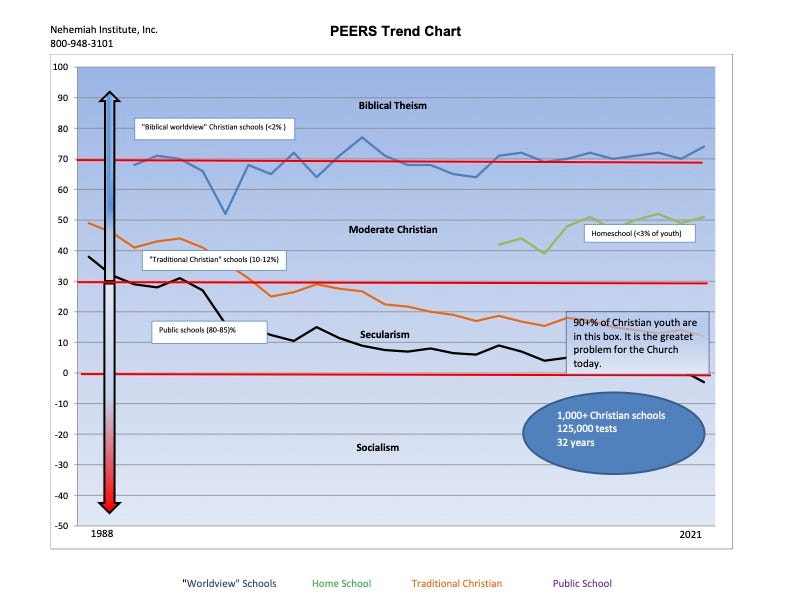
(This is a graph from the Nehemiah Institute website, the organization that produced the PEERS test. That blue line represents a TINY number of Christian private schools that have a high focus on biblical worldview training, as opposed to those that focus on academics - only about 2% of Christian kids are in those types of schools. The green line represents homeschoolers, who only started being included later. Honestly, I think we homeschoolers could do better. The traditional Christian private schools and public school lines should be sobering. Keep in mind that all of these lines represent ONLY youth from Christian households.)
The benefit of homeschooling as it relates to all this can be summed up in one word - time. Parents have the biggest influence on their kids, but that influence can be diluted by a lack of time spent with our kids. Homeschool parents have an advantage because we are not lacking for time - we are with our children nearly all day, every day!
Homeschool children (should) have an up-close look at what a Christian life should look like, because they see it playing out in every situation we encounter daily. Scripture tells us that “everyone who is fully trained will be like his teacher” (Luke 6:40). That’s a little sobering, isn’t it? It means as homeschool parents we need to be careful that we ourselves are living out a truly biblical worldview. Our strengths in this area will likely be passed on to our kids, but also our weaknesses.
Time is also a crucial ingredient for building any strong relationship, including with our children, and having strong relationships with both parents provides a distinct statistical advantage in passing on the faith to our children.
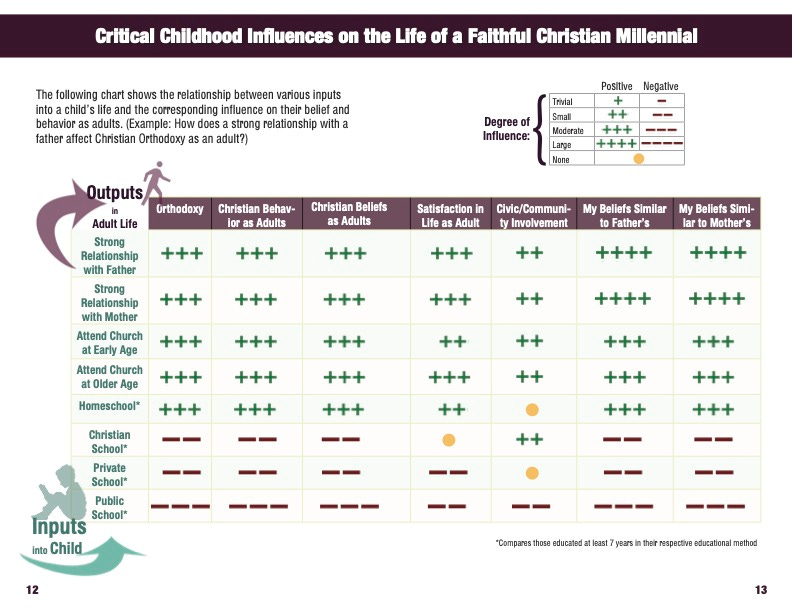
(This chart is from the Gen2 survey, which is a general survey of churched Millennials and the impact of their upbringing on their practicing of the Christian faith as an adult. You can look at all the findings from that survey here. They are up-front about the fact that more people who were previously homeschooled took the survey than those schooled in other ways, despite trying to specifically advertise to those who went to public or private school. Despite the sample being a little uneven, it’s still pretty interesting.)
Homeschoolers, we have alot of things working for us! The trick is not to squander all these advantages, which can certainly happen. This whole discussion was simultaneously heartening and challenging to me.
For Further Reading
Though the website is a little old-school, I recommend exploring the Nehemiah Institute - they are the organization that produced the PEERS worldview test, and they have alot of interesting documents and resources.
For more information specifically on the exit of youth from the church and what we might do about it, I highly recommend the books Already Compromised and Already Gone by Ken Ham.
Israel Wayne has a couple helpful books about parenting and education that I’d recommend: Raising Them Up and Education: Does God Have An Opinions? (don’t be put off by the title, it’s a great book - I even had my oldest read the chapter on math, and it greatly improved his attitude!). He also has a systematic theology and biblical worldview curriculum for middle and high school that we picked up for our 8th grader this year.
George Barna also has a new book related to this topic, and I haven’t read it yet, but I might pick it up: Raising Spiritual Champions.
Other Interesting Sessions
“Why Americans Can’t Read” - Alex Newman - It’s shocking how illiterate we have become in America - half of American adults are functionally illiterate, and those statistics are coming from the Department of Education itself. I couldn’t find an article from Newman related to this topic that wasn’t behind a paywall, but the answer to this problem comes down to one thing - we need to ditch the “whole word” method and go back to actually teaching phonics.
“The Problem With School Choice” - Alex Newman - There are alot of unintended consequences with allowing the government to fund ALL school choices via vouchers and other forms of funding, which is a big push in many states right now. You can read this document if you are interested, which includes alot of the information Newman shared in this talk.
“Help! The Highschool Years Are Coming!” - Jan and Roger Smith - This session included so much encouragement for the high school years! I couldn’t find any articles about this specific topic online, but you can hear from the speakers on Zan Tyler’s podcast.
“Is Homeschooling Just For Women? - Israel Wayne - My husband went to this session and came back inspired and challenged in his role as a Christian (and homeschool) dad! I’d personally recommend anything by Israel Wayne, I’ve been encouraged by his resources many times. You can check out his ministry here.
Interesting Curriculum
Homeschool In A Box - I didn’t get to explore this booth much, but this company is on my list to research - their booth had a bunch of themed, hands-on learning boxes that I think my kids would find so fun!
Homestead Science - This is a family-run homeschool company from Idaho, and I am particularly interested in their survival study, which seems right up our alley.
Math Without Borders - We spent a good amount of time talking with the man who owns this company about this high school math option - it’s on my list to research for next year! But I wanted to point out “The Grandpa Project” on his website, which includes a bunch of videos he put together for his elementary and middle-school grandchildren to learn more about math - and this page in particular is the best math facts flashcard system I’ve ever seen online. All this is free on the website, and we’ll definitely be using it this summer! He also has a “bonus topics” page with a bunch of fun math videos that we’re going to explore.
New Generations Resources - Generations is a curriculum company we’ve been exploring for history mainly, but my little girls have also been enjoying their science books - they have this new science curriculum coming out for 3rd grade about the human body that I’m considering getting! They also released this adorable catechism book for the littlest learners - I really love that all the answers to these catechism questions are an actual Bible verse.
There are so many other interesting tidbits I could share, but I’ll leave it there! I would love to hear if you’re ever been to a homeschool conference, how it was helpful for you, or your thoughts about any of the topics or resources I shared here! Comment below, or hit reply if you are receiving this in your inbox.

Our homeschool year ended so differently than it began, it's a little difficult to begin this post.
Last fall, I knew this would be one of our hardest homeschool years yet, and so I went into it in tackle mode. We struggled, we cried, we ended each day exhausted, but by the end of the first semester, we were enough ahead that we were able to take it easier in the spring. Because of that, I feel pretty optimistic as we closed the books in May, and it's hard to remember back to where we started. But taking some time to reflect and learn from our successes and failures is a good thing, so I'm looking through my old papers as I think the year through.
I already shared things that ended up working well for us this past year, and so this post will be focused more on lessons learned, and things that didn't end up working for us.
First off, to get you into my frame of mind last fall, I spent the entire summer last year worrying about some areas of weakness in our homeschool. There were several skills I wanted to be stronger, several additional subjects I wanted to cram into our school year, not to mention the fact that my oldest was solidly in Junior High, and I wanted to start helping him develop specific study skills. Oh yes, and my youngest would be starting kindergarten.
It was alot to tackle all at once, and I approached the coming school year with a sense of dread, if I'm going to be honest. But I "tightened my belt", as Bilbo Baggins would do, and jumped into the school year with fervor.
Lesson #1 - It is (mostly) a mistake to overload the curriculum.
In my planning frenzy last year, I decided we would try to make it through five (five!) history curriculum books for my older kids, each of which were each meant to last an entire year. I justified this because a couple of the books were a little lower-level, and I figured we would just read through them on the side instead of doing the assignments. I'm still not sure why I decided to do this - remember, I was extremely anxious last summer, and not quite in my right mind.
What ended up actually happening is that we got through three of the planned-for books, which in retrospect feels like quite an accomplishment, even though we fell short of the five (five!) I had planned. What we did get through was actually quite lovely, and my oldest has surprised me by quoting something from our Greek and Roman studies (example:"'Tis the crumpled rose leaf!"). So I say it is only mostly a mistake to overload the curriculum, because if I hadn't overloaded, we certainly wouldn't have learned so much this year. But it is a mistake in that it can make everyone's lives a little miserable if you tip over into "too much". More may be doable than you might think, but certainly not five different history curricula (five!).
History Curricula We Accomplished:
- America's Story 1 - 2nd, 4th
- America's Story 3 - 5th
- World's Story 1 - 7th
- The Story Of The Romans by Miller
- The Story Of The Greeks by Miller
Lesson #2 - Know how much each child can handle.
When I was doing my homeschool planning last summer, it struck me that my oldest would be in junior high, and that I wanted him to develop some of his own school planning skills over the course of the school year. So I typed up an actual school syllabus for him with some planning guidance, and I bought my 7th grader an academic planner so he could plan out how he wanted to accomplish his school work.
I don't think this was a bad plan in theory, and he did end up using that planner. However, because of the aforementioned overloading, his work load got a little messy, and I eventually went back to typing up checklists for him each week. The checklists ended up being the basis for his planning rather than the academic planner, but I was still happy to see him developing initiative and taking charge of his schedule by moving things around when it worked better for him.
However, as I moved back to my checklist system, I started to see just how much I was asking each child to do each day. Some of my children were not daunted at all and shot through a 9-10 item daily checklist. But for some of my kids, when they had a long checklist handed to them each morning, would freeze up and feel like they could never get through it...so why even try?
As I noticed our multiple history books and up to four different language arts tasks, I realized I needed to organize differently to keep our days more doable for my easily-overwhelmed kids. I ended up alternating some language arts subjects, rotated history books, and dropped some not-as-important things all together.
The sweet spot seemed to be about 5-6 school subjects per day, and once I made the checklists look more easy to accomplish, our school days ran much more smoothly with less complaints. This also built their confidence - once they started feeling like they could accomplish their checklists in a reasonable amount of time, I could add in another study here or there.
Realizing my kids' mental stress tolerance when confronted with a checklist helped me make adjustments so they could be successful. We still accomplished quite alot, but recognizing their limits made a big difference in everyone's attitude.
Lesson #3 - Sometimes the answer is to do more.
A big message to homeschool moms when encountering an area of struggle is that homeschooling is so great because you can give your child individualized attention, you can make adjustments for them so they can still be learning while developing skills, etc. "Don't worry, it will come!" they say.
Pretty sure that I've said that before, and it's been true! But another thing that is not as often mentioned, but that I've also found to be true, is that if your child is really struggling in an area, sometimes you might just have to buckle down and do more of that thing than you ever thought you could handle, especially when it comes to skill-based subjects.
This may seem to contradict what I said in my last point, but it's all a balance, isn't it? If I have a kid struggling with handwriting, I can take oral narrations so as not to make them hate learning history because of the writing required...but also, we probably need to increase the time spent on copywork. Struggling reader? I will read books to them that are above their reading level, but I should also require them to read more books at their reading level out loud. Spelling terrible, slow at solving math problems? Rote memorization of spelling lists and multiplication tables it is.
Learning isn't always gentle and natural, and it doesn't always feel beautiful. Sometimes it's just plain hard. But isn't it a gift for our children to learn that they can approach something that feels impossible, and through gritted teeth they can overcome it? That it can even, someday, become something that is easy for them? That kind of lesson may require forcing a child to do a school task they don't want to do, and tears and attitudes may be involved, and sometimes you can make adjustments - but all that doesn't necessarily mean we should ease up on the actual task at all. Sometimes a break is helpful, sometimes leaning into the struggle even more is what’s needed. It takes a lot of wisdom to know which way to go.
Lesson #4 - Homeschools must be bathed in prayer.
I realized anew this year that homeschooling five kids is actually really hard work, and it's going to be really hard work for a long time. I'm basically working full-time job hours, or more, and I'm going to go to bed exhausted many nights, and I might cry sometimes, and that's all pretty much normal.
In addition, no matter how well I plan, or how great my curriculum choices, or how many methods I try, my children are going to have areas of struggle and weaknesses that the curriculum may or may not cover. It's my job to help them through it, even when I have no idea how.
And after struggling to my wit's end, then I'll remember the folly of my whole approach. Because of course, I remember, I can't do this without leaning on the Lord.
I don't have enough wisdom, or stamina, or kindness and gentleness and patience, to homeschool well on my own. I need to constantly set my mind on God's Word, pray for His guidance and help, and pray for His wisdom as I make homeschool decisions for my kids.
Everyone says this sort of thing so much that it starts to feel trite, but it shouldn't. I want my children to learn who Jesus is, learn to love Him, more than I want them to learn to be proficient at math (though I want that too). If the Lord doesn't build the house, the laborers work in vain. If the Lord doesn't illuminate the heart of a child, the homeschool mom teaches in vain.
Leaning on the Lord in prayer as I educate my children must be the central thing, the first-thing to be done, and I've seen the necessity of this as we wrap up a very difficult year in a better place than I anticipated. This attitude of reliance on Him is something I want to cultivate more in myself as a homeschool mom in the years to come.

Until the first week of May we were unsure whether or where we would be going on vacation, but at the last possible minute we made a decision. So amid the whirlwind of finishing our school year and planning a homeschool graduation ceremony for our church's homeschool group, we somehow managed to plan, clean the house, shop, and pack up for vacation.
We decided to go to Arizona this year - it's been 7 or 8 years since we visited, and the kids don't even remember going to the Grand Canyon. I'm just going to do a fly-over view of the highlights of our trip!
The Grand Canyon
We made a "quick stop" at the Grand Canyon before making it to our actual destination of Phoenix. It was really neat for the kids to see the canyon when they will actually remember it at these ages! On the way we listened to a few talks from Answers In Genesis about some of the current creationist research and theories surrounding the Grand Canyon, and it made this visit even more interesting for us.
Confession: I always feel a little underwhelmed looking down at the Grand Canyon, at first. But I think it’s only because it is just impossible to understand the scale of it. We did spot a helicopter in the canyon this time, and it looked smaller than a gnat. It’s just hard to understand how deep it really is. I’d love to go to the bottom someday. Looking up from the bottom might help my brain understand better.


We were also a little amazed to see lots of people leaving the trails and walking on rock outcrops, with a drop of hundreds of feet right behind them, as they stood on a mere four square feet of flat ground! And it was windy. I couldn’t point it out to them without being rude, but people die at the Grand Canyon every year by falling in. If you visit, just…don’t be stupid. There are lots of perfectly safe places to get good pictures at the top, climbing around on slippery rocks is really not necessary.
Saguaro National Park
We decided our main destination would be Phoenix because it's relatively close to Saguaro National Park. We basically planned this whole trip around going to Saguaro, and it was such a pretty place!
Saguaro National Park was really beautiful, the classic desert landscape. The desert can feel so dry and empty, but Saguaro is full of interesting plant life (and I'm sure animal life too). We got there early in the morning, when we could hear birds chirping among the cacti, it was so quiet. I wish I could explain to you the scent of desert air in May, it’s like no other scent I know, floral and woody and dry.
I took so many pictures, but I felt like I couldn’t capture the sheer amount of saguaros in this one little section of the park! They were everywhere, and some were so tall. Saguaros grow about an inch every year - they don’t even start to grow arms until they are 50-80 years old. The tall saguaro I’m standing beside in the photo below is probably around 150 years old.


One thing we didn’t know before we went - there are actually two separate sites for this park that aren’t connected. We were very confused when our map apps were leading us two different places, until we figured it out. The west site has three times more saguaros than the east site, but some on the eastern site grow fatter!
Joshua Tree
We decided to take a one-day trip to California to see Joshua Tree while we were so far south, since it's only about 3 1/2 hours from Phoenix. This was my first time ever visiting California! The gas was expensive, and it was hot in the desert, and there were wind and solar farms all over the place, but other than that it didn't feel as foreign as I expected (what can I say, California has a reputation).
Joshua Tree National Park was a very unique place to visit! Joshua Trees are actually not a tree at all, they are a yucca-type plant. They grow very slowly, similar to the saguaro cactus, and we even saw a few of them still flowering. We entered the park from the east and drove through to the west entrance, and I quite liked going in that order…we went from the Colorado desert to the Mojave desert, and from mostly cacti (including a “teddy bear cactus”) to Joshua trees everywhere! Some of them were so tall, and some areas so thick, that they looked like pine trees from a distance. It felt a little bit like a Dr. Seuss landscape.


One thing we wondered about as we saw a few dead “trees” was what the inside of the trunks looked like…the ranger at the west entrance answered that question. Apparently the trunks are good for almost nothing - the insides are spongey, and when they are dried out they’re still very fibrous, and they can’t be burned. Just interesting to look at, I guess!
Palm Springs
On the way back from Joshua Tree we looped around and visited Palm Springs - I am so glad we drove through there, because it was a very interesting town. As you drive, the surrounding desert is so dry, and the air so dusty - but suddenly you see snow-capped mountains in the distance, and before you know it you are tucked away next the the hills, driving through palm-tree lined streets. I don't think I've ever seen surroundings change from desert, to mountainous, to almost tropical so fast!
Palm Springs is a natural desert oasis, and it's surrounded by parts of the Aqua Caliente reservation - we decided to take a little hike into Andreas Canyon, which is on the reservation.
I am not exaggerating when I say that Andreas Canyon was probably one of the coolest places I've ever been. This is a natural fan-palm oasis, and feels more like you're in Hawaii than in the middle of the Mojave desert. The palms are so tall, it's surrounded by tall rock walls, the water is bubbling and crystal-clear, and the air is sweet-smelling and refreshing. It was just gorgeous! We hiked on the trail, took a bunch of pictures, waded in the water, and enjoyed the unique atmosphere of this place!


Apparently there can be rattlesnakes near the oasis, but we didn't see any - October to May is supposed to be the best time to go to avoid snakes. We stayed about an hour, but I could have spent much longer there. If we are ever in the area again, I would definitely go back - it's worth the entrance fee (about $60 for our family of 7), even for an hour.
Phoenix
We spent some time just relaxing on this trip as well, which was much needed. We spent an entire day at our hotel's water park, we went on an evening desert walk, and walked to a European pastry place for breakfast. Having a little down-time between visiting national parks on this trip was so nice.


Petrified Forest National Park
On the way out of Arizona we detoured to check out Petrified Forest National Park. This park used to be a national monument, and got upgraded to a park in 1962. It's a very overlooked park, but I'm glad we stopped there - it was so interesting! There wasn't any single big sight to see, but as you drove through the park there was petrified wood just everywhere. We have some petrified wood areas in my state, but the sheer amount of petrified wood here was pretty amazing. I probably wouldn't go out of my way to go there again, but it's worth a stop if you are driving through, and it's one more National Park that we can cross off our list!


I've been to Arizona four times in my life, and I think this was my favorite trip there. We were able to see so much, we went in May when it wasn't ridiculously hot yet, and we worked in some relaxation days, which is the key to a good trip in my book. It was a much-needed and inexpensive vacation for our family this year, and proof that you don't have to spend alot of money or go too far to have a worthwhile vacation - there are so many interesting places in the U. S. that are worth seeing!
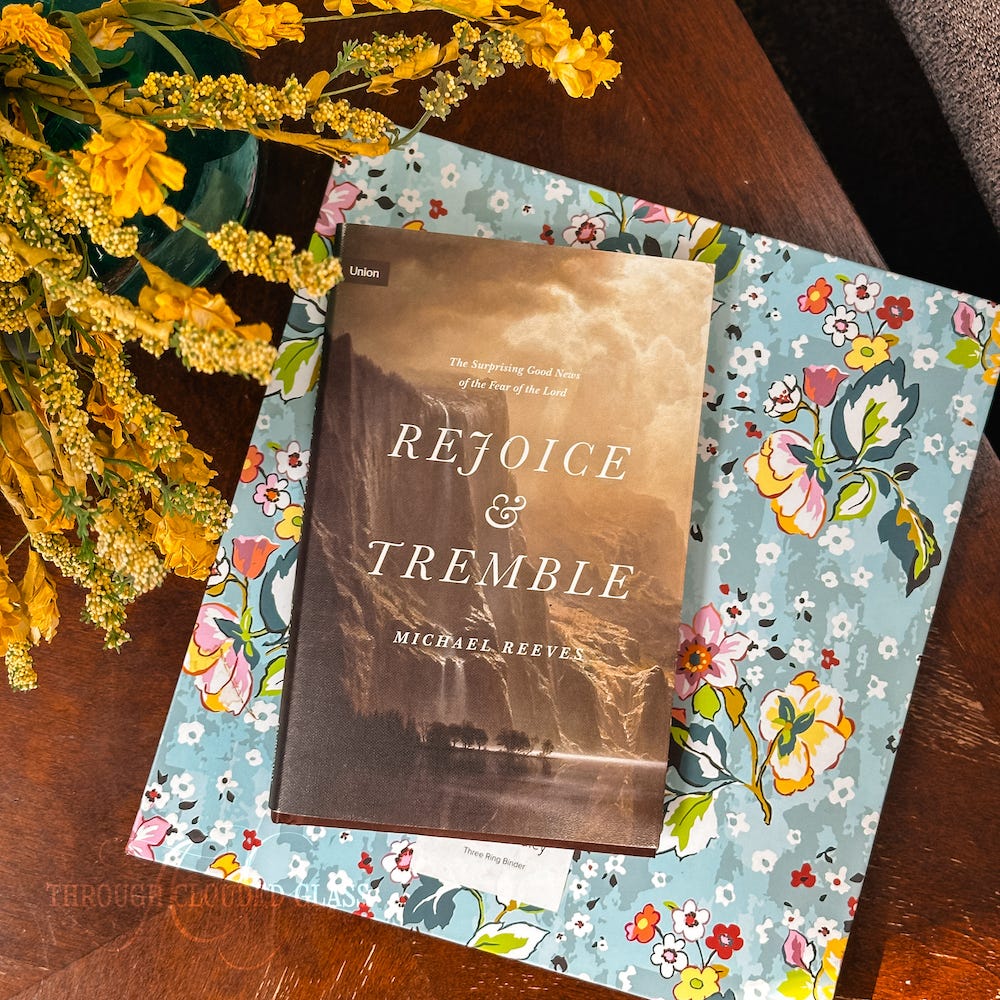
Years ago, when I first started reviewing books for my blog, I read a book by a popular Christian author that I would have thrown across the room if I were the type of person to do that sort of thing.
The thing that made me so frustrated with the book was a particularly sappy description of loving Jesus in a way that made him sound more like an eager-to-please boyfriend. I have long hated Jesus-is-my-boyfriend language in books, because it is offensive to the very idea of a biblical love of God, and completely eliminates the idea the idea that we are to fear the Lord.
The fear of the Lord is an idea that alot of Christians have trouble understanding, and I relate to that struggle too. Now, loving the Lord, we think we understand that. Even the idea of having a reverence for the Lord is something that is simpler to comprehend. But fearing the Lord? Why do we need to fear Him if we know He loves us enough to die for us? Doesn’t perfect love cast out fear? Isn’t “fearing the Lord” more of an Old Testament thing? We know we don’t have to fear His judgement if we are in Christ, so what are we supposed to be afraid of? And are we literally supposed to be quaking in our boots, or does fearing the Lord mean something else?
In Rejoice And Tramble*, Michael Reeves provides one of the most beautiful explanations for the fear of the Lord that I have ever read. He explains that properly fearing the Lord is a more full, complete idea than merely having a '“reverence” for Him, a word which Reeves calls not inaccurate, but nevertheless “anemic”. Fearing the Lord is not in opposition to loving Him - it instead describes the right sort of love we are to have for God, a love that trembles. It is a fear that is not joy-sucking, but joy-fulfilling. It is not a fear that causes us to cower or run away, but rather a fear that draws us to our awesome, fearful God.
“The Lord looks on the heart and is pleased when He finds it quaking in wonder, love, and praise…For the nature of the living God means that the fear which pleases Him is not a groveling shrinking fear. He is no tyrant. It is an ecstasy of love and joy that senses how overwhelmingly kind and magnificent, good and true God is, and that therefore leans on Him in staggering praise and faith.” pg. 67
One section that especially rung true for me is where Reeves explains the right fear of God as our Creator, but then reminds the reader that properly fearing God’s creative power is not enough with the understanding of Christ’s redeeming work for His own. Fearing God as Creator has always been the easiest way for me to understand the fear of God, because His power and might and infinite understanding are so obvious and awesome when viewed through His creation. But Reeves points out that we only rightly understand God as the Creator when we understand the work of Christ. We don’t have to earn the favor of our Creator, which is something that would lead us unto sinful fear since we all instinctively know it is impossible. No, Christ has earned salvation for us, and because of that we can truly enjoy the glimpses of God’s character that we see in creation.
“The fear that is ‘purely evangelical’ continually and wholly rests upon Christ’s redemption as sufficient, not our own works. It is not left wondering if our sins might outweigh Christ’s righteousness, or if Christ’s righteousness needs some topping off of our own efforts. It can therefore remain constant in dependent wonder, not terror. Indeed it’s wonder is only increased by the perfection of Christ’s redemption and the infinity of His grace toward such extreme sinners as us.” pg.99
We can have true pleasure in the work of God in creation when we understand Him not just a fearful, powerful Creator but also the one who is our Redeemer. A right fear of God is a fearful love, understanding His power and greatness as it stoops to rescue “ a wretch like me”. This great God, who created all things, also redeems us, and because of that all His works become more wondrous and joyful to us.
“‘Gazing upon the vast expanse of waters - looking up to the innumerable stars, examining the wings of an insect, and seeing there the matchless skill of God displayed in the minute; or standing in a thunderstorm, watching, as best you can, the flashes of lightening, and listening to the thunder of Jehovah’s voice, have you not often shrunk into yourself, and said ‘Great God, how terrible art thou!’ - not afraid, but full of delight, like a child who rejoices to see his father’s wealth, his father’s wisdom, his father’s power - happy, and at home, but feeling oh, so little!’” -quoting Spurgeon, pg. 79
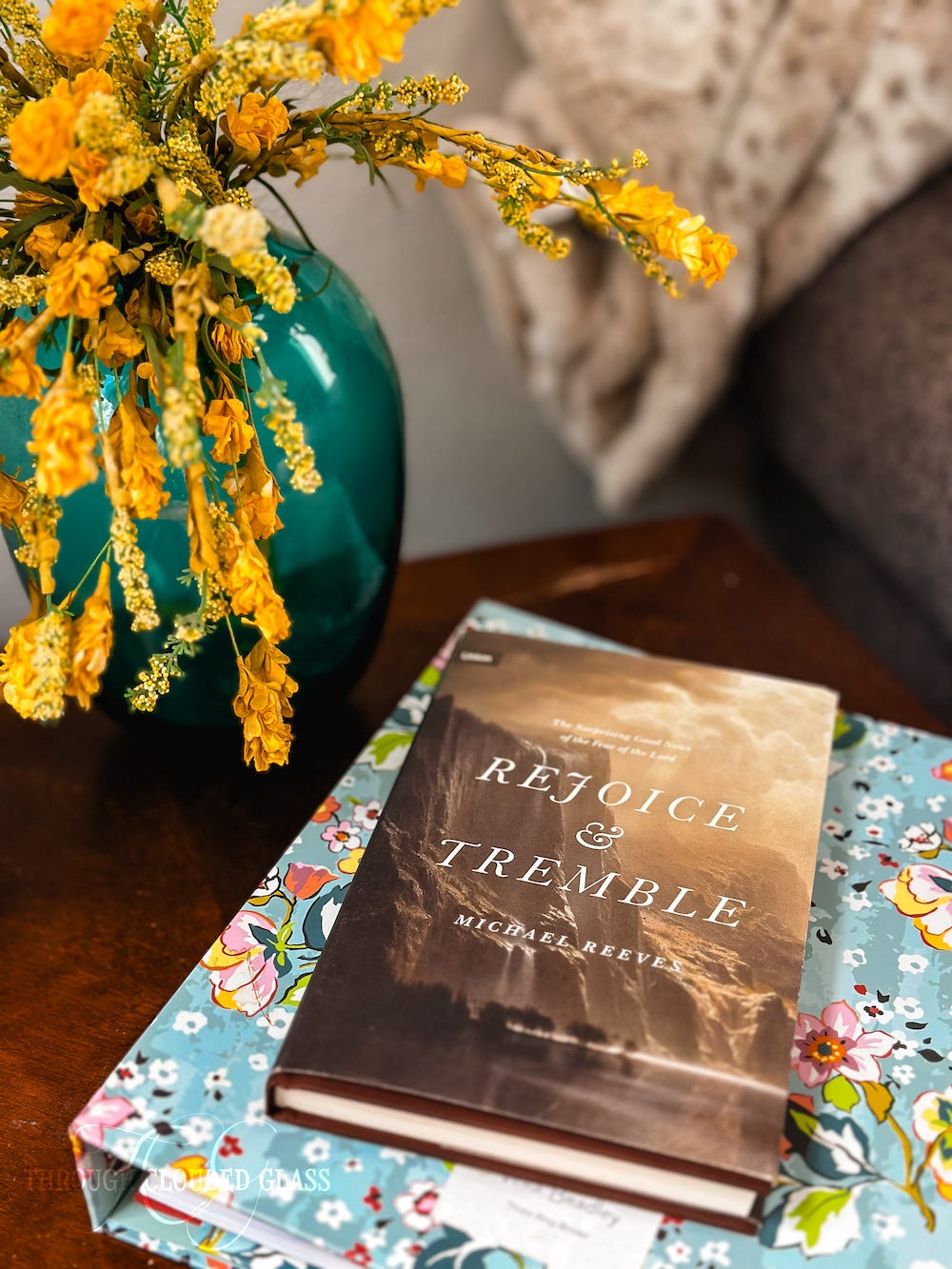
In this book, Reeves draws on the writing of some of the greatest theologians in Protestant history, such as John Calvin, Jonathan Edwards, and Charles Spurgeon, which adds a depth of understanding to his explanations of the fear of God. I appreciated Reeves including the experiences of fearing the Lord from men from church history who truly understood the fear of the Lord as something that makes us “rejoice and tremble.”
“The fear of the Lord is the only fear that imparts strength.” pg. 146
Reeves reminds us that this fear of the Lord is not just a right response to understanding who God is, but it is the fear which causes all other fears to pale in comparison, like the light of the sun making the light of a candle of no effect.
“As the fear of the Lord grows, it outgrows, eclipses, consumes, and destroys all rival fears. So the Lord could advise Isaiah: ‘Do not call conspiracy all that this people calls conspiracy, and do not fear what they fear, nor be in dread. But the Lord of hosts, Him you shall honor as holy. Let Him be your fear, and let Him be your dread.’ When the fear of the Lord becomes central and most important, other fears subside.” pg. 144
Reeves closes the book with reminding us that “the fear of the Lord will endure forever.” Our eternal state will consist of us finally fearing the Lord perfectly, and falling on our faces in loving adoration, joy, and wonder. The Holy Spirit works in us by growing our joyful fear of the Lord, and in Heaven it will finally be perfected. We will understand God rightly forever, rejoicing and trembling. The way Reeves described it made me long even more for that day!
“In other words, our eternal joy will consist precisely in this fear of God: rejoicing and marveling so entirely that, like the angels, we burn and tremble and fall on our faces in wonder.” pg.163
If you have ever struggled to understand the fear of the Lord, I highly recommend picking up Rejoice And Tremble. I firmly believe this book will deepen your understanding of this wonderful fear that we are called to, and make you love the Savior all the more for His fearful glory and majesty.
*Note: I received a copy of this book for free from the publisher in exchange for a review - this is my honest opinion.

(Photo from a visit to our friends' ranch last fall.)
Between the months of September and May, it seems my life revolves around being a homeschool mom. That's a bit of an exaggeration, but not by too much. There may have been a time when that fact would have bothered me - I wanted time to do other things, to be other things. But I've come to recognize that there is a time and a season for everything, and this is the season that we are in the thick of homeschooling. Instead of kicking against the goads, I've come to embrace homeschooling as the equivalent of my 9-5, my career if you will. When viewed through that lens, I don't think I could pick a career I love more than educating my own kids, being with them all day, watching them grow and change and learn and thrive. What a blessing!
Since we've established that I can't think of much else beside homeschooling right now, why not embrace it on the blog too? I thought it was high time for a little 3/4 year homeschool update (actually more than that now, since by the time this post goes up we'll have a mere two weeks left!).
State Of The Homeschool
First, lest I scare any future homeschoolers out there, the last couple school years have been more all-consuming than is normal for us, or than is typical for the average homeschooler.
I am, after all, homeschooling five kids this year, even though one of them is just in kindergarten. On top of that, we've been in a transition period with some of my kids as I work on getting them to be more independent with their schoolwork - teaching independence surprisingly still requires alot of supervision. So we are very much in the thick of it right now. I said at the beginning of this school year that I anticipated this year being the hardest year of homeschooling for me as the mom. In reality, I think the 2022-2023 year, this year, and possibly next school year, will probably be the three hardest homeschool years we will have to go through. So I'm really just in the middle of the hard.
In some ways this year has been easier than last year, and in some ways it's been more difficult. I anticipate that I'll say the same thing next year, and after that we may be fairly home free (oh wait, after next year my oldest will be starting high school, so maybe not).
For the rest of this post, I wanted to share some things that are working well for us this year. There are alot of things that didn't work that we've changed this year, but I think I'll save some of that for a different post. These are the successes thus far.
Daily Checklists
A couple years ago I started creating daily checklists for my kids, and the effect it had on our productivity was incredible. At the time we started, most of my kids were not completely capable of following a checklist on their own, but just having everything laid out on a checklist helped me to help them keep on track. There are alot of subjects that would have fallen through the cracks if it weren't for our checklists! I understand there are alot of free-spirited homeschoolers out there who are probably cringing right now, but if you have ever had a sneaky feeling that you aren't accomplishing what you had hoped for in your homeschool days, let me just extol the virtues of the checklist. There are so many subjects and books that we would just forget about if it wasn't for my checklist system.
Weekly Planning
Every weekend I set aside a half hour to take a look at my plan for the week and make adjustments. This involves adjusting our checklists and taking a look to make sure we are on track with different subjects. At the start of the year I set lesson "checkpoints" for different weeks of the year, and that way I can quickly look and see if we are falling behind on our quarterly goals. Then I adjust our checklists as needed.
I originally modeled my checklist system after Sarah Mackenzie's notebook system, but I got tired of writing everything out each day, so now I just keep a "Weekly Checklists" file on my computer. This is our "ideal" homeschool week, but since we often have appointments, Bible study, or homeschool support group meetings, I just adjust the schedule depending on what we have going on that week. Just being able to look ahead and plan for the days where our school hours will be cut short has helped so much in keeping us on track this year, with a minimal amount of stress from me.
Front-Loading The Year
I admittedly pushed everyone a little harder than normal during the fall semester of school. I had so many things I wanted to get to with the kids this year, and with my middle schooler I had some tougher schoolwork to add to his plate. Did I over-plan a bit? Considering I was pushing all of us through THREE different history curricula and TWO science curricula, yes (why did I do that?). Were we a bit miserable in the fall? We were, and yes, it was my fault.
Don't worry, I came to my senses. I relaxed everything a bit this spring, but pushing us a little harder in the fall ended up giving us some space to pull back a bit this semester. It's actually been very nice, and we ironically are still going to get to most of what I planned, just at a more reasonable pace. I won't be so crazy in my ambitions for next year, but I might keep that idea of front-loading the year and having a more leisurely spring.
Morning Time
We've been more consistent than ever with morning time this year, and it's been a really lovely time for us as a family. We've read through the whole New Testament together during morning time (we're finishing up with Revelation right now), and this is my favorite accomplishment of the year. We've had time to discuss all this Scripture together, and I think of the promise that God's Word will not return void, and I know that it will hold true with reading through the Bible as a family too. We've also finished several chapter books together, done some art and music and poetry study, and sang hymns and psalms together. Morning time has been a staple for us for a while, but I'm really happy with how fruitful it feels this year, even though we've kept it simple.
A New Science Curriculum
We've always used Apologia Young Explorers for science, but this was the year for us to branch out a bit. My oldest is solidly in middle school now, and I thought it was time we challenge him a bit more with science. With my younger kids, I was admittedly getting a little weary of the Young Explorers format (even though I do love that curriculum), so I decided it was time to just try something fresh.
For middle school science, I chose to let my oldest go through the first edition of the Apologia middle school textbooks, mainly because my mom gave me a box of my old curriculum and my science book was in there. Now, I know, science textbooks do need to be updated periodically since science is always changing and new discoveries need to be added. However, when looking over my old science textbook, I realized that middle school science really hasn't changed that much. At that age, you are still learning alot of scientific basics. There might be little things here and there that are slightly out of date, but the important facts that they really need to know are the same, so I felt comfortable with using an older, but really rigorous and solid, textbook. What I love about the first edition Apologia textbooks are that there are no bells and whistles required. There is no "student notebook" that needs to be purchased, there isn't a ton of excess information that you really don't need to know. All that's required is a basic lined notebook (that the student uses to create their own scientific notebook), basic household items for experiments, and the textbook. I think the format has done alot to help my oldest learn some valuable study skills, and teaching him how to write up experiments. I'm quite pleased with how well the old Apologia has fit into our homeschool, so I'm going to be looking into the middle school Berean Builders texts for next year, because they are written by the same author as the first editions of Apologia and follow a similar format and philosophy.
For elementary science, we're tried out a new-to-us curriculum this spring called Science In The Ancient World by Jay Wile at Berean Builders. This curriculum series goes through different scientific discoveries through history. We have been studying the Greeks and Romans in morning time, so having some of our science tie in with that same time period has been really interesting for us all. The lessons are short and explained in a really great way for this age group. With Young Explorers, I felt that alot of the textbooks were more at an upper elementary level, and I had to simplify it quite alot for my younger kids. I think Science In The Ancient World is much easier to use with young elementary and older elementary at the same time. Each lesson involves an experiment, but most of the experiments use basic household supplies and are very quick and easy to do. We've been doing many more experiments than we usually do just because this curriculum makes it so simple! I am excited to get as far as we can before the end of the year (we only started in January, so we won't have time to finish - remember the TWO science curriculum thing), and I'm interested in picking up the other volumes so we can coordinate our science with history in the future too.

So these are the things I am really happy with in our homeschool right now. I'm sure I'll be back over summer break to share some lessons learned or plans for next fall, but for now, in the home stretch, it's good to review some of our wins as we try to finish the year strong.
Please let me know if you want a deeper dive on any of the things I mentioned! If you want to hear more about anything, I'll write a longer post and maybe even put together some IG stories to give you a peek at our homeschool!
Note: I wrote this post as a type of newsletter for my local homeschool support group, after my thoughts were originally stirred by this Instagram post. I hope you all get some encouragement from it too!
---
In many, many ways, homeschooling is easier now than ever before. There are so many curriculum companies, so many resources, so much inspiration and ideas. Back in my mom’s day, there were basically two major curriculum companies for homeschooling, and that was about it. We have an embarrassment of riches in the homeschool community now, and that really is a blessing.
But along with the amount of resources and moms sharing their homeschool journeys online, I think the mom in the trenches can sometimes get her homeschool vision skewed. So many people are sharing the fun things they are doing, or the different ways they are educating, complete with beautiful photos of elaborate projects and smiling faces. Many wax poetic about how wonderful homeschooling is, how much freedom it’s brought their family. I am confident this is all true and coming from a good place. Homeschooling is portrayed as beautiful, peaceful, aspirational, joyous even; a chance to take charge of your child’s education and homeschool them according to their own needs, a chance to give them the joy of learning. And homeschooling can be and often is all those things! But along they way, maybe some moms are picking up an idea, even subconsciously, that if homeschooling is not smooth sailing, maybe it’s not right.
We homeschool moms don’t as often share when we are going through a hard season of homeschooling. We don’t want to discourage potential homeschool moms from giving it a try, so we are quiet about the times when our child breaks down crying over copywork, when doors slam and frustration boils over, when school takes longer than a full time job would each day. We tuck it aside, save it to cry about to our husband or mom later, and put on a good face for our mom friends. But maybe we secretly wonder if we’re really supposed to be this exhausted, if maybe we’re doing it wrong, or if homeschooling isn’t really what we’re supposed to be doing at all.
Sometimes the advice is “lighten up a little bit”, “don’t worry so much about academics”, and “connection over curriculum - just put the books away for the day”. And maybe sometimes that advice is the answer. But it actually can’t be the answer to do that every day - the bookwork actually does need to get done eventually, and your child does need to learn to multiply someday, and if we lighten the workload forever we’re not actually not doing ourselves or the kids a favor. Self-discipline has to be learned in it’s own way in homeschooling, by child and mom. Putting the books aside can’t always be the solution. My mom used to say “it doesn’t have to be fun, it just has to get done”, and that’s a truism that homeschool moms don’t like to admit anymore, but that doesn’t mean it’s not still true.
Just because something is hard, doesn’t mean it’s not worthwhile. Just because there are bumps along the way, maybe whole years where homeschooling is a struggle, that doesn’t mean it’s not the right thing for your family. Just because no one is having fun right now, doesn’t mean you’ll be deprived of joy forever. A good marriage, for instance, is hard work, but we know how much joy and fulfillment comes when we stick it out through thick and thin, and we know that marriage is a good thing worth fighting for, even when we experience difficult seasons. I view homeschooling in much the same way.
The truth is (and I feel confident in saying you could ask any longterm homeschool veteran and she will confirm this), homeschooling is not always fun. It is actually hard work. There are going to be rough patches, rough seasons, rough years. It takes a level of grit, self-sacrifice, and mental toughness on the part of mom to make it for the long haul, and this is true no matter what style of homeschooling you choose.
Homeschooling takes a determination to see through the rough times until you come out on the other side, because everyone experiences struggles (they just don’t talk about it), and this too shall pass. It takes endurance to train your kids in study skills, self-discipline, and character development to make your days run smoother, and that’s not always fun. There often will be tears along the way. These are growing pains. These struggles don’t mean you’re doing anything wrong. It may mean you’re going to have to put in a little more effort and time into helping your child mature and grow…until one day you’re making dinner and realize that your child did a whole math worksheet today without breaking down. Until you notice that they actually read their Bible and pulled out their school books after breakfast without being asked. Until you see that instead of bickering with their younger sibling as per usual, they are on the couch helping their sibling work through a chapter book.
And that is when you get that surge of joy. So stiffen your spine, homeschool mom, and “learn to love what must be done*”, even when it’s hard. Pray for wisdom, pray for endurance, pray for patience, and stick it out. There will be joy along the way.
May God reward your work, friends, and I know He will when we homeschool as unto Him.
---
*This is a phrase I think I originally heard from Mystic Winckler or Karen Andreola, but is attributed online to the poet, Goethe. I don't know where I heard it first, but it has become a refrain for my homeschool.

Yesterday it snowed. We had at least a couple inches on the ground, a couple days after I had planted my herb garden in our little porch greenhouse. The basil was wilting, so my son transferred it back to a portable pot and brought it inside for me.
Today, literally by the time the sun rose, all the snow was already melted, and my kids convinced me to let them go exploring in the woods alone. I gave them alarm whistles and walk talkies and sat on the porch waiting for them to come back. Dare I say, it was actually hot in the sunshine!
Such is spring in the mountains.
The last month has been a bit of a whirlwind. We had a nice Easter, and then before I knew it I had our homeschool group meeting, then visiting a co-op, then my son's birthday and a birthday party, then field trips and eye appointments. This week we'll have standardized testing, and two nights out with friends for me. It's a good busy, but busy nonetheless.
Homeschooling is going well, we're well into the homestretch and limping toward the finish line. I made limping sound like a bad thing just now, but it's more like finishing a bunch of our curriculum and trying to find some things to fill these last few weeks before we're officially done for the year. I bought this Shakespeare curriculum, I want to finish this book about the ancient Romans, and there will be spelling and math drills abounding. My daughter asked if we could start the second book in the Anne Of Green Gables series as a family read-aloud, so that might be on the horizon as well.
We've been on the go so much, I haven't had as much time to bake or experiment in the kitchen, and I'm itching to try making something new. I did buy coconut milk and seltzer water in preparation for making refreshing springtime beverages, and we've been stocking up on all the fruit. As summertime approaches, you'll probably find me gathering recipes to try when I actually have time to make things again (hopefully).
One new thing in April is that I re-started my no/low buy after falling off the wagon in March. I'm adjusting my rules a bit to allow myself to buy a couple things a month as long as they are less than a certain dollar amount. It's going well so far, and it's a good thing, because our puppy ended up costing us $800 this month. That was not a happy day.
Dot basically swallowed a toy, and ended up throwing it up, but still looked so miserable and listless that we were worried there was something else stuck in there. Our vet was closed for the day, so I ended up taking her to an emergency vet, and oh boy. Never again.
You know you've made a mistake when everyone in the office keeps calling an animal "your kiddo", while your actual kiddo is holding said animal. I would have walked out, but they took the dog away for an hour, and I had to strategically ask for her back before being able to escape. It cost that much just for an X-ray, and even though there wasn't anything obvious in there, they wanted to put her on an IV overnight! A dog, remember. And a dog which I already told them was still drinking plenty of water. I said I was taking her home to take our chances until our regular vet opened, and what do you know, she was 100% back to normal the next day.
Thankfully we were holding money aside to buy a new window, so we'll just have to wait another year. Who needs airtight windows anyway?
We went on a field trip to the zoo a couple weeks ago, and as we were walking down the paths, I noticed that I could smell the flowers, so our state is in that stage of spring now. Then when we went to church the other day, the flowering trees were just at their prime! I'm so glad I took some pictures that day, because as I mentioned, a few days later we had more snow. I was circling the tree, taking pictures and videos and big, deep breaths of the floral air, and I must have been making quite a spectacle of myself because a woman walked up and asked if I wanted a picture with the tree. I was a little embarrassed, but obviously agreed. She commented that she and her husband "were admiring your joy over the trees, and we just thought you needed a picture".


And all of a sudden I wasn't embarrassed anymore, because why would anyone not have joy over flowering trees? Joy is actually the right response, and who cares if everyone can see it? God could have just left all the flowers on the ground, but that would have been too obvious - instead He decorated branches with them. Isn't there something magnificent about that?
This week I hope you too find something that makes you so joyful that you make yourself a little ridiculous over it. Let it spill over, scatter it all around, and don't be embarrassed if someone comments on it, because why should you not splash a little joy on them too?
"Let the heavens rejoice, and let the earth be glad;Let the sea roar, and all its fullness;12Let the field be joyful, and all that is in it.Then all the trees of the woods will rejoice before the Lord.
For He is coming, for He is coming to judge the earth.He shall judge the world with righteousness,And the peoples with His truth."Psalm 96:11-13
Happy Spring, friends!
Subscribe to:
Posts (Atom)


