


14 hours ago
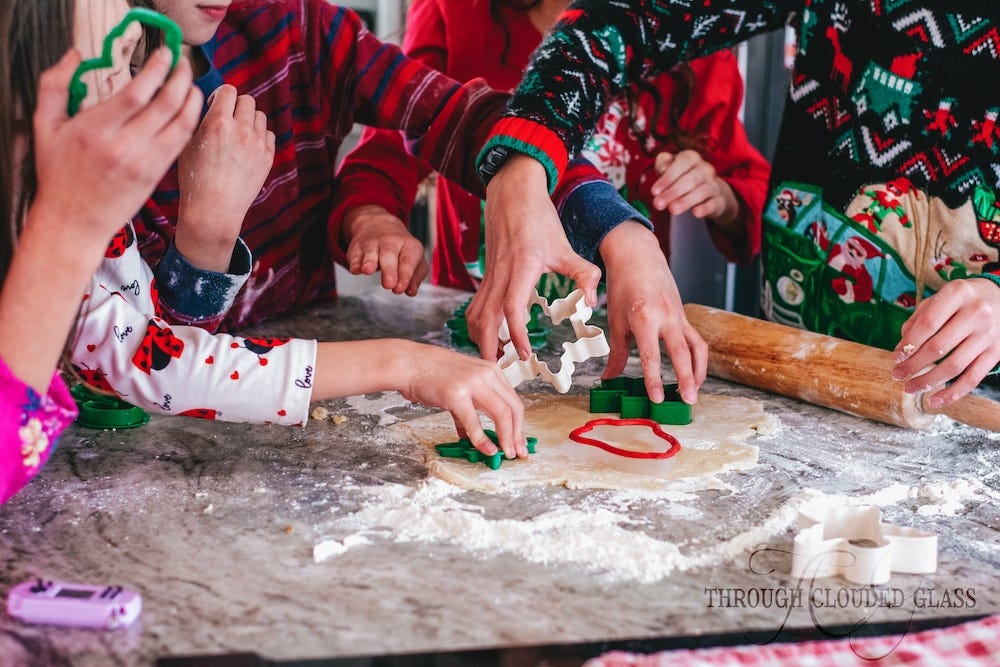
Every December I find myself wanting to set aside a weekend for in-depth Advent and Christmas school planning. Unfortunately, since it is December, I almost never have a weekend for such pursuits.
It occurred to me that alot of other homeschool moms might be in a similar place. You want to have a beautiful plan for a meaningful Advent, or Christmas School, but you have very little time to put one together. Maybe you end up purchasing a pre-made plan, only to realize it will take time (and more money) to gather all the required books and craft supplies.
I am going to share what we fall back on for homeschooling during the Christmas season. This non-plan requires no purchases (except the ones you want to buy), no required resources, and it’s open-and-go in the sense that you can do it mostly on the fly if necessary.
This is my very simple plan for adding some Christmas flair to those homeschool days between Thanksgiving and Christmas. We keep up with some of our regular subjects, but the “Christmas school” activities are a priority.
Step One: Pick a book of the Bible to read through.
Since Advent is about waiting for the coming of Jesus, and the whole Bible is His word, literally any book will do! But we want to make sure we are not neglecting spending time with Jesus by reading scripture together. Some great choices would be:
Any of the Gospels - Start at Jesus’s birth and end with His resurrection!
Psalms - Especially 100-150, which are songs of praise.
Genesis - The number of times Genesis points ahead to Jesus is astounding!
Revelation - Not for the faint of heart, but points to what we believers are waiting for now - Jesus’s return.
Step Two: Choose some Christmas carols to sing (and learn).
There are so many places you can print music for some of the good old Christmas hymns. I appreciate this free hymnal, which has a good selection. I printed up seven copies the “Incarnation” section of the hymnal, and that’s what we use for singing, but you can also just look up the lyrics for songs you want to sing as you go through the month. Sing one well-known carol each day, and choose one that’s new to you to learn each year. We have found some new favorites this way!
Songs In Our Bundle Of Papers:
Joy To The World
Hark The Herald Angels Sing
Angels We Have Heard On High
Silent Night
Away In A Manger
O Little Town Of Bethlehem
We Three Kings
Once In Royal David’s City
The First Noel
In The Bleak Midwinter
O Come All Ye Faithful
See Amid The Winter Snow
God Rest You Merry Gentlemen
It Came Upon A Midnight Clear
Good Christian Men, Rejoice (highly underrated)
Let All Mortal Flesh Keep Silence
Gentle Mary Laid Her Child
Step Three: Gather Christmas books.
This is my favorite part…if you are a homeschool mom, I know you probably have some Christmas books already in your house. Round them all up into one big stack, and grab a couple to read each day! If you really don’t have that many Christmas books to choose from, hop on your libraries website and place a few holds. Read them as they come in. I have a list of our family’s favorite Christmas books here, but the best ones are the books your library actually has, so work with what you have. If all else fails, try searching for a few titles on Youtube - there are many videos of popular picture books being read aloud.

Step Four: Make a list of Christmas crafts and goodies.
Think of goodies you were planning to make anyway, or crafts you remember from your childhood. Think of items you already have around your house you could use for crafts - construction paper for chains, oranges you could slice and dry, extra yarn you could knit into garland, flour you could make into Christmas playdough… be creative, but don’t overthink it! It doesn’t have to be complicated to be a wonderful memory. The humble paper chain is greatly underrated.
Some Christmas Craft Ideas:
paper chains
aper snowflakes
dried orange ornaments
cranberry and popcorn garland
any Christmas art tutorial on Youtube (just do a search)
handmade gift tags
Our Favorite Christmas Goodies To Make Together:
Sugar cookies
Ginger cookies
Chocolate covered pretzels
Salted caramel cookie sandwiches (using this filling recipe)
Christmas fudge
Wassail

Step Five: Make a list of activities you want to do.
You do not have to do all the activities that are listed in a perfect Advent guide - in fact, I think you shouldn’t try! Choose some things that are fun and meaningful (or even just practical) to you and your own kids, and put them on the calendar. Here are a few ideas to get you started:
Christmas Activity Ideas:
Make a day of taking the kids shopping for each other’s presents
Bake, of course (see Step Four)
Write Christmas cards (recruit everyone to help - why not?)
Listen to music from the Nutcracker (or watch the ballet on Youtube)
Listen to Handel’s Messiah
Watch an old Christmas musical
Play a game together (we like this game for a Christmas theme)
Do a Christmas scavenger hunt at the mall (search for ideas, or get these handy cards)
Read A Christmas Carol together and then watch the movie
Assign secret pals, like a secret Santa only you do nice things for each other
Plan a poetry teatime with Christmas poems, tea, and cinnamon toast (or another easy snack)
Those five steps are really all you need to do “Christmas School”! I know because this is how we have made December homeschooling special for the last five years or so.
You will notice that not all of these ideas are very school-ish or perfectly coordinated, but that’s not the point of adding Christmas activities to your homeschool day. The point is to slow down, enjoy each other’s company, make memories together, and make the excitement and wonder of Jesus birthday tangible for your kids…yes, through cookies, and playdough, and Christmas lights, and as much beauty as you can cram into the season. Point them to the reason we do all these joyful activities: because of joy for the gift of Christ Himself.

I love this quote:
“At Bethlehem, God’s Word became flesh and dwelt among us, the Consolation of Israel was born of a woman-and that moment was so staggering that even the stars had to come down and see it. And then, every year, we celebrate that moment. We take one of the most difficult theological truths— the Incarnation—and attempt to show that truth through our celebrations. The men can talk about the Incarnation, church fathers can write important treatises about it, pastors can preach about it, theologians can parse and define it ... but we women are the ones who make it taste like something. We make it smell good: How crazy is that? ‘And for my next trick, I will take Athanasius’ De Incarnatione and I will say it with cookies and wrapping paper and cinnamon and marshmallows and colored lights and tablecloths and shopping trips and frantically-last-minute-late-night-Amazon-orders and ham—and I will do it in such a way that my four-year-old will really GET it, and it will send roots deep down into his soul where it will anchor his loves and his loyalties and shape his allegiances well into his nineties.’”
-Rebekah Merle, ‘Eve In Exile’
This is what we are doing amidst all the flurry of Christmas preparations and activities. Creating the wonder of Christmas in little hearts doesn’t have to be complicated, but I hope you’ll remember that all these little special touches do matter. They make the birth of Jesus and the Gospel that much more impactful, special, and tangible to our children and families as we celebrate God’s greatest gift to mankind - our Savior.
As Charles Spurgeon says in another favorite quote:
“Feast, Christian, feast! You have a right to feast. Go to the house of feasting tomorrow! Celebrate your Savior’s birth. Do not be ashamed to be glad - you have a right to be happy.”
Let’s make this Christmas season as joy-packed as possible, even on homeschool days. Not aesthetically perfect, or impeccably organized, or flawlessly executed - just hectic, happy, warm, sparkling, messy, calm, cozy, exciting…and joyful most of all.
I realized the other day that it’s been months since I did a reading update. Since I have fifteen books I haven’t shared, my goal is to write reviews for four books a week until Christmas. If you are building a reading list for 2026, here is your chance to get some ideas!
I’m titling this one “Light Books With Deeper Themes” because if you read the first three, which are all light in tone, you will find themes of loneliness, friendship, anxiety, and hope.
The last one is not a light book, but each of these book posts will have a wrench thrown in. Just go with it.

Valencia and Valentine by Suzy Krause
I read a different book of Krause a few years ago and thoroughly enjoyed it. This book has been waiting in my Kindle for quite a while now.
In Valencia and Valentine, we are introduced to two characters. One is a young woman, Valencia, who works in a call center, is very socially awkward, and is afraid of everything - basically a young woman who is afraid to live. The other is an old woman, Mrs. Valentine, who lives alone, but loves being around people and finds excuses to talk to others and ways to fill her days with small, meaningful things - an old woman who has learned how to live well.
I thought I knew where this story was going, but about a quarter of the way through I realized I had no idea. As we get further looks at Valencia’s existence we realize how dark and empty it truly is, and for most of the book she stays right there in that darkness. We also start to realize that all is not quite well with Mrs. Valentine.
Just as I started to feel rather uneasy about what was actually going to happen to these two characters, I glimpsed the light at the end of the proverbial tunnel. The ending was completely unexpected, slightly tragic, but also happy and sweet. I don’t want to spoil it, so that’s all I’ll say. If you pick this one up, be prepared for the unexpected.
Content Notes: Some discussion of mental health disorders, some disturbing dreams/hallucinations.
Bottom Line: Sweet and sad and a little weird. Pick it up if you don’t mind a little tragedy with your uplifting fiction.
The Happy Life Of Isadora Bentley by Courtney Walsh
I read a Christmas book I did not enjoy by Walsh last year, but I decided to give her another chance and I’m so glad I did. Isadora Bentley reads an article she considers to be ridiculously with 31 ways to be happy. She decides to turn the article into a science experiment in order to debunk the article. Along the way she ends up finding new friends, connecting with a certain professor, and learning how to enjoy life. I thought this was a sweet, uplifting read, and I thoroughly enjoyed it.
Content Notes: One of the things she tries is yoga, and as someone who has convictions against yoga I wasn’t a fan of that. No other notes that I can recall,
Bottom Line: Pick it up if you are in the need of something quirky and light.
The English Masterpiece by Katherine Reay
In the 1970s, Lily helps her boss, Diana, plan a new Picasso exhibit at an art museum, but she ruins the opening event by impulsively declaring one of the Picassos a fake. She is immediately put on leave, and is devastated. Not only has she potentially lost her dream job, but her family will suffer from the lost income. She has to find a way to find out what is really going on with that painting, and hopefully save her job and her boss’s reputation, and stay out of jail. But is everything as it seems with her boss? Where did that painting actually come from?
As someone who doesn’t know much about the art world, and also doesn’t like modern art at all, I was surprised how much I enjoyed this book. Reay did a great job explaining the basics of how museums acquire paintings, and there were interesting explanations about what makes art special as well. The underlying themes of this book are more about friendship, sisterhood, and the value of meaningful relationships. I also really enjoyed the 1970s setting, which I thought was painted well.
Content Notes: Vague references to sexual relationships, but I would consider this a clean book.
Bottom Line: Pick this one up if you like mysteries, museums, and are a tiny bit interested in art.
Midnight In Chernobyl by Adam Higginbotham
I mentioned in the spring how I had become interested in the nuclear disaster in Chernobyl, and this book is a very thorough history of it.
Higginbotham tells the story of what caused the disaster, the initial reaction to it, the efforts to contain the reactor, the effects on the surrounding countryside, and the devastating effects on the men who were sent to work in the danger zone. He also tells how it was finally contained, and some of the research that has been done in the Chernobyl area since the disaster. Despite writing about such a devastating event, I thought the author offered a balanced view of nuclear energy, including the concerns and the benefits.
I learned so much from this book - including that the scientists were initially worried that the reactor, if not contained, would burn down through the earth, perhaps never stopping until it reached the core. Can you imagine? I listened to this book on audio, which I think was the right way for me to read it, because it let me get the information I was interested in without getting too bogged down in the names and details.
Content Notes: Some cursing in various quotes, people die from cancer and related illnesses because of the radiation.
Bottom Line: If you don’t know much about Chernobyl, this is the book to learn about it.

These are books I finished in the early fall, but as I revisit them in writing this review post, I am remembering how much I enjoyed them all. The first three each struck a nice balance between being meaningful and easily readable. And the last one was just fascinating without having to try.
Have you read anything similar this year, with a light tone but deeper underlying themes?
The living room is sparkling with Christmas lights and candles, we have polished off the last of the Thanksgiving leftovers, and the temperature outside has plummeted. African peanut stew (this recipe) is on our menu tonight, but I wanted to take a moment to reflect on the season that has just passed before jumping fully into Christmas.

What We Did This Fall
Our fall weekdays were unusually busy, and our weekends were unusually quiet. We started fall fresh off a trip to Idaho. Our church friends recently moved there, and we went to visit them. I’ve never driven that far north before and was so fascinated by how different the forests were from home. The tree were taller, the needles were different, and even though it was quite dry the air felt more humid. We stayed on a lake, and my children learned how to kayak, and it was a wonderful way to end the summer

.On the way home from Idaho we made a detour to Glacier National Park. My husband has wanted to go there for years, but it was always too far out of the way, so this was our chance! It was a really interesting park to visit - very forested, very mountainous. If you are approaching from the west, you will drive through Kalispell, and Flathead Lake is absolutely huge and breathtaking in itself. Entering the park itself doesn’t feel very impressive at first, but you should definitely try to get a time slot for Going-To-The-Sun road, because it is absolutely worth the drive. The road winds through all these sharp mountains, up a mountain pass with gorgeous views, and beside two beautiful lakes. You can access some pretty cool hiking trails along the road too - we only had time for one, but it was to a waterfall.

Once we arrived home I was immediately thrown back into our homeschool co-op, and I am teaching the middle and high school history for the first time this year. We are learning ancient history, and I think it’s going pretty well. As I type this I am pushing down some anxiety in the back of my mind about the fact that I need to create the fall exam before the kids have to take it on Friday, but it will get done.'
My middle daughter turned ten this fall, and we always throw a friend birthday party for the kids when they turn ten. I chose the easy option and made it a harvest theme, which my daughter was perfectly happy with. We have cupcakes with leaf toppers, leaf scratch art, and beaded corn crafts from Hobby Lobby. I served chili, pickle chips, and pumpkin dip with apples, and we had a campfire with s’mores even though it was sprinkling rain.

We did take some time to go to our local corn maze this fall after skipping it last year, and it was worth the ridiculously high admission. We all came away with pumpkins from the patch, sore feet from walking all through the maze, and the contented type of tired from a fun day together. It was especially delightful for me to see how seriously my older kids took the maze this year.

October was a flurry of chopping wood for the winter and hunting seasons. My husband got a deer and my son got his first elk. Our freezer is pretty full and I am grateful.
We offered to host Thanksgiving for my husband’s parents this year. It was only my second time making a turkey, and my first time making the entire meal myself. I found the trickiest part was getting and keeping everything hot at the same time - the sweet potatoes could have used a little microwaving, but overall it was a success.

Here I am going to explain how I brined the turkey, because I forgot how I did it last time and I want to remember for next time. After defrosting the turkey, remove the neck and innards. Soak it in a solution of water and salt - about half a cup of salt to a gallon of water. Throw some thyme, rosemary, lemon, and cranberries in the brine too (I’m not sure the cranberries did much, but they made it look pretty). Let it soak overnight, up to 24 hours. Remove the turkey from the brine, rub the skin with butter, put a sliced apple and half an onion inside it. Fill the bottom of the turkey bag with carrots, celery, and onion to act as a rack, then put the turkey in. Seal the bag according to the package directions, cook for four hours at 350 degrees, and presto! Flavorful, not-dry turkey.
As we gathered around the table, the Christmas lights already twinkling in the background because we set up our tree the weekend before Thanksgiving, my middle son cheerfully suggested we should all say something we were thankful for. None of us could cover every gift we have received of course. My son chimed in with “I’m thankful for everything!” and that is the closest anyone could come to expressing everything that needs to be said, even if it might feel a little bit like cheating. Everything we have is a gift from God, and we are thankful.

Fall 2025 Favorites:
Beverage: Coffee, just plain coffee,
Meal: Chicken noodle soup, with Grandma noodles of course.
Show: All Creature Great And Small with the kids.
Movie: You’ve Got Mail, we watch it almost every fall and I love it every time.
Activity: Fall hikes in our mountains, and we took several this year.
Book I Read: The Vanishing At Castle Moreau by Jamie Jo Wright - delightfully creepy, but it all turned out alright.
Read-aloud: Anne Of The Island by L. M. Montgomery. We always start a new Anne book in the fall. I’m not sure if we’ll continue into the next books after Anne is all grown up, but we might. I find several of the situations in which Anne finds herself in this current volume are instructive for the teenage years.
Looking Forward To In December:
Family Gatherings: Particularly a “trail of lights” we do with my family every year, and seeing my grandmother in a couple weeks.
Christmas Crafts: I purchased clay snowmen to make, cups to paint, and ornament supplies.
Singing Hymns: I’ve been attempting to learn an old, but new-to-us, hymn with the kids each year. A couple years ago we did “Good Christian Men, Rejoice”, which I think every family should learn because it’s a very enthusiastic song for the younger crowd. Last year we learned “Let All Mortal Flesh Keep Silence”, which is more somber, but the lyrics really convey the gravity of what Jesus did in becoming a baby. This year we will learn “Gently Mary Laid Her Child”.
Christmas School: We will lighten up on some of our subjects and fill in the gaps with some more festive activities, or put a Christmas spin on some things. I’m still in the planning stages. This Christmas booklist will be used heavily with my little girls.
Sunday School Christmas Party: We still attend a good ol’ fashioned Sunday School, and we will be caroling at our Christmas party this year. I have very fond memories of caroling as a child. If you have never caroled, I hope you get the opportunity someday. The way the door slowly cracks open, and a look of suspicion turns to happy surprise (and sometimes even tears) is something to behold. I hope that some of those memories of giving unexpected joy to a stranger will be formed for my kids this year.

What was your favorite part of fall, and what are you looking forward to in December?
Our family has never paid more than $200 per person per month for groceries, and we are often well under that amount. Whenever I mention that to people, I get questions about how we manage to spend so little on groceries each month. In this post I am going to give you all my tips and tricks for saving money on groceries. If you aren’t doing any of these currently and start applying them all, I feel pretty confident in saying you will save money!

However, I am very aware that each family is going to have their own unique dietary circumstances. Regional grocery prices vary, and that also plays a role. Each family also has family advantages and preferences that are going to play into the grocery budget.
For example, our family has a deep trunk-style freezer and an ancient extra fridge in the garage that allow us to buy in bulk, and you might not have that (though I feel strongly that deep freezers are a good investment). Our family has five kids but only one of them is a teenager so far. We might tick up our grocery budget as more of our kids reach the bottomless-pit stage. Our family also buys very little red meat because we hunt for our meat, and that’s cheaper. If I had to buy red meat, I’d tick up our total grocery budget by another $100 a month or so.
Still, I do very much believe that if you apply these strategies faithfully, you will save a noticeable amount of money, regardless of what other restrictions you might be working with.
Let’s Make An Agreement…
Before we start, I just want us to all understand that saving money on groceries is all about choices and trade-offs.
There are some challenges we all face in grocery shopping that are outside our control, but there is a lot that we can control. As you read, you will be evaluating your own values and deciding where you are willing to spend extra money and where you want to try to save. If you decide to spend where I would save, it’s not that one of us is right and one is wrong. These are just the choices we are making for ourselves and our families, and it’s okay if they are different.
For example, our family chooses to not buy organic. If it’s important to you to buy everything organic, you are going to spend more money than me. That’s just the way it is. Each of us are making choices about how we choose to spend our money, and neither one is inherently better than the other. If we are both comfortable with the trade-offs we are making, we can just set the moralizing aside and focus on the money-saving strategies! This is a no-judgement zone from me, and I would like it to remain a no-judgement zone in the comments as well. Agreed?
Ways To Save Money On Groceries
I’m going to cover basic strategies in this section - some of them so basic the average reader may roll their eyes, but I want to cover everything. Some of these points will be expanded into additional articles, but alot of them you could apply right away. Find a couple that you aren’t already doing and try to implement them, remembering that it takes a while to build or change a habit.
1. Buy Generic Brands
It is truly amazing the price difference between brand-name and generic brands, and this is across the board. I’ve compiled the price of basic old-fashioned oats for you as an example:

Quaker Old-Fashioned Oats, 18 oz. - $3.69 at King Soopers
Kroger Old-Fashioned Oats, 18 oz. - $2.79 at King Soopers
That’s almost a dollar you could save on just one item at King Soopers by buying generic, and that’s not even taking into account current coupons which could reduce the generic brand cost further. If you can save an average of a dollar per item buy buying generic, that could add up to a significant amount of savings.
And I’ll tell you a little secret - the generic brand is almost always the exact same thing as brand name. Sometimes the generic brands are even packaged in the same factories as brand-name items!
There are occasional items where you may find that the brand name is cheaper, and if so, go for it.
There may be items where the generic and brand name products are noticeably different, and you may sometimes prefer the brand name product over the generic version. I would encourage you to see if you can change your tastes to accept the generic version. Give the generic a few months and see if you still care about the difference. If you really decide that the brand name is worth the extra cost to you for certain items, go with peace and buy that brand name. At least you have weighed the options and are making conscious decision instead of letting brand names be the default.
How I Do It: I almost never buy the brand name version of anything, unless there is no generic version, or unless I notice the brand name is on sale and happens to be cheaper. My Exceptions: Oreos, Malt-O-Meal Mini Spooners (semi-generic), and laundry detergent.
2. Shop At Cheaper Grocery Stores
Not all grocery stores are created equal, and if you want to save money on groceries, you need to put aside your prejudices and choose your grocery store based on average prices.
Sometimes the price at a less expensive grocery store may be better than even a sale price elsewhere. Let’s look at our oatmeal example from the last section, shall we? Here I’ll compare generic prices at three different stores:

Walmart Old-Fashioned Oats, 18 oz. - $2.66
King Soopers Old-Fashioned Oats, 18 oz. - $2.79
Target Old-Fashioned Oats, 18 oz. - $2.89
Safeway Old-Fashioned Oats, 18 oz. - $3.49
You’ll notice that Walmart is at least 13 cents cheaper than the next option, a whole 83 cents cheaper than if you bought the same item at Safeway!
You may think these differences are petty, but I assure you, across the fifty different items you might buy in one grocery trip, a few cents here and there does add up to a decent amount of savings. Let’s compare eggs, for another example:

King Soopers Eggs - $2.79/dozen
Walmart Eggs - $1.97/dozen
Now, depending on where you live, you may hav more limited grocery store options, but I would encourage you to expand your travel for groceries if it would make a difference. You don’t have to shop at the grocery store closest to you. You can combine trips to make driving for groceries more economical.
How I Do It: I live in a rural community, and technically my closest grocery store is Safeway. But I don’t shop there. I pick up groceries another 25 minutes down the road at Walmart whenever I happen to be headed to town anyway. I buy almost everything at Walmart and Sam’s Club, which I find to be the cheapest grocery stores within an hour of me. There is a King Soopers and Dollar General a little closer if I need to make a quick stop for 1 ingredient, but I would never do a full shopping trip at those stores.
As an aside, I’ve had many people comment to me how they can’t stand the environment of Walmart. They want a nicergrocery shopping experience. If that’s your choice, that’s fine; remember, everything here is about trade-offs. If you want to pay more for a better experience, that’s your choice, just be aware there are cheaper options out there.
3. Cost Per Ounce Matters
Remember, saving money on groceries often comes down to cents, which adds up to dollars. The reason we buy generic is because of the savings of cents per ounce. But we can also save per ounce by buying in bulk.
Let’s compare oatmeal again (we will use King Soopers to make the point here):

Kroger Old-Fashioned Oats, 18 oz - $2.79 (15 cents/oz.)
Kroger Old-Fashioned Oats, 42 oz. - $4.49 (11 cents/oz.)
Quaker’s Old-Fashioned Oats, 160 oz. - $7.98 (5 cents/oz.)
As you can see, it is much less expensive to buy even the name-brand oats if I buy it in bulk! But even if I don’t buy in bulk, I save almost a third of the cost if I buy the larger size at King Soopers.
If it’s an item that you know you eat alot of, or if it’s a shelf-stable item, see how many cents per ounce you can save by buying a larger size. Think in percentages instead of cents if it helps you quantify the savings. If I buy oatmeal at Sam’s, I am getting 66% off the regular, non-bulk price at King Soopers. If you do this for multiple items, it actually adds up to alot of savings by the end of the month!
How I Do It: Unless I am a couple days until pay day and trying to keep the actual dollar amount low, I always check the price-per-ounce and buy according to that. I may spend more for one grocery trip, but I will save in the long term.
That leads me to my next point…
4. Buy In Bulk (When It Makes Sense)
I just showed you how much you can save by buying in bulk with oatmeal. Let’s try comparing a few more items.

505 Green Chili - $3.92 each (at Walmart)
505 Green Chili - $3.33 each (3-pack at Sam’s)

Peanut Butter - 12.1 cents/oz. (at Walmart)
Peanut Butter - 10 cents/oz. (at Sam’s)

Frozen Chicken Breasts - $2.98/lb. (at Walmart)
Frozen Chick Breasts - $2.70/lb. (at Sam’s)

Hummus - 27.2 cents/oz. (at Walmart)
Hummus - 14 cents/oz. (at Sam’s)
Some of these differences might not seem like much, only a few dollars here and there. But remember, if we do this for as many items as we reasonably can, the savings do add up at the end of the month.
Now, there are occasions when buying in bulk may not be less expensive, so back to our earlier point, always check price per ounce!
Some other times it may not make sense to buy in bulk are when you know you will only use a small amount of an ingredient, when you are buying things that will go bad quickly, when you are working with limited fridge space, or when there is a very negligible difference in the bulk price (less than a cent per ounce).
How I Do It: I check to see if there is a bulk option whenever it makes sense, and it’s almost always at least a little cheaper - and sometimes, as in the case of the oatmeal, it’s a significant percentage off. I pay for the Sam’s Club premium membership, which gives you cash back for every purchase you make, which you can then apply toward paying the membership fees whenever they come due - so I only end up paying $40-60 dollars each year ($5 or less per month). The savings from buying in bulk do outweigh that small fee in the end.
5. Think In Terms Of Price Per Meal
When you are planning out meals, I recommend thinking of how much a particular meal is going to cost per person.
For instance, I can feed everyone in my family spaghetti and meatballs for about a dollar per person. That’s a great, cheap meal, and we eat it a few times per month! On the other hand, I’ve calculated all the ingredients for something like lasagna, and it comes out to about $4.20 per person, four times as much. If we ate meals at that price every time I cooked dinner, we’d be spending much more on groceries each month. I save those more expensive meals for special days, or limit them to once a week.
Another thing you can do is think of ingredient substitutes or similar meals you could do for less. For example, spaghetti pie is a meal that tastes very similar to lasagna, and it uses similar ingredients - but because it uses cheaper meat and less cheese, it only costs about $1.70 per person.
How I Do It: I aim for the majority of our dinners to fall between $1-2 per person. Lunches and breakfasts typically cost less than that because of buying in bulk.
6. Try To Limit Pre-Made Items
In general, it’s going to be cheaper to purchase ingredients and make your own items than to buy pre-made foods. This is especially true for pre-made/frozen meals and baked goods.
For example, I can make a loaf of sourdough bread for literally a few dimes worth of flour and salt (as opposed to buying a loaf for $3-5)! I could make up to two dozen cookies for around $3 worth of ingredients. Even the one frozen meal I do buy often - frozen pizza - I probably could make for less from scratch than if I bought it pre-made.
I’m not saying there is no place for pre-made meals, because there definitely is. It would take alot of time to make pizza from scratch, and we usually eat pizza as a last-minute decision when we have a movie night, so I’m willing to pay for convenience sometimes. But if I paid for convenience all the time, that could really add up. We try to make things ourselves as much as possible. It usually tastes better than store-bought, and it saves money.
How I Do It: I stock my pantry with ingredients, instead of fully made items.
7. Shop Online And Do Grocery Pickup
We truly live in an interesting time, and one of the perks of living in 2025 is that we have the option to have someone else do the shopping legwork for us. I can’t tell you how much time this saves!
The money-saving ramifications might not be immediately obvious, but it does end up saving money in multiple ways as well. Here are the benefits:
-I can schedule pickups around times I am already going to be near the grocery store, which saves me gas money.
-I can check my pantry to see what I already have before checking out online - so if I already have it, I don’t accidentally re-buy it.
-I can check multiple grocery stores for each item to make sure I’m getting the best price - for instance, I was about to check out with my 5 dozen eggs at Sam’s, but I checked Walmart and saw they have 5 dozen eggs for a dollar less. That’s a dollar saved!
-I have time to sit and consider my grocery total before checking out, and I can contemplate what items I could eliminate or swap out to stay within my budget.
The only drawback in shopping this way is that it provides less opportunity to model smart shopping habits for my kids, which is something they would get more if I took them with me to the store. I am thinking of remedying this by picking one kid per month to sit next to me at the computer and walk through my process.
How I Do It: I mostly shop at Walmart and Sam’s. At the beginning of each month I take my time crafting a grocery order and schedule it for pickup when I will already be going to town. Walmart has free grocery pickups after a certain dollar limit, and Sam’s has free pickups if you have the premium membership (which is more cost-effective because of the money-back deal I mentioned above).
8. Shop Only Once Per Month
This is a strategy I use that I know saves me a decent amount of money each month.
The reasons why may not apply to everyone, but what I find is that whenever I make a trip to the grocery store (or place a grocery order), I always end up spending more than I originally intended. I might be hungry when I’m ordering and add a few more treats than I planned. Maybe I’ll think of a certain (more expensive) shampoo I wanted to try, and I end up adding it. I might think of something that’s running low; maybe I could wait to buy it until next month, but because I’m shopping and thinking about it right now, I go ahead and buy it.
These incidental or impulse purchases can really run my total up, and once I’ve thought of buying something it can sometimes be hard to talk myself out of buying it. And this happens every time I go to the grocery store. By limiting my trips to the grocery store each month, I limit my opportunities for impulse purchases, and thus save money.
How I Do It: I always get questions about this when I mention it, so I will be devoting a whole other post to it soon. Put your questions in the comments and I will make sure to cover them when I write that article.
Most of the previous tips are things to think about before shopping…here are a couple to think about once you have the food home.
9. Reduce Waste And Eat Leftovers
You can plan to make a little extra dinner in order to have leftovers for lunch the next day, and that is going to be less expensive than making a whole other meal for lunch. Keep an eye on the food you already have in your fridge and make it a goal to not throw anything out. If you make a double meal, you can get two dinners out of it - and once again, for some meals that’s more cost effective than buying and making a smaller amount.
For instance, with my recipe and how much my family typically eats, making enough chili for two full meals (instead of one and half) is a difference of one more extra-large can of chili beans - which is only about $2.98 at Walmart. So we can get an extra meal for less than a dollar more per person, just by planning to make extra.
How I Do It: I plan to eat leftovers either for dinner or lunch within one week; after that it might not be safe anymore. For some dinners I make extra and count on having meals of leftovers, so some meal ingredient costs will count for two meals for the whole family, further reducing the price. The less you waste, the more money you can save.
10. Be Frugal With The Snacks
Snacks between meals can add up to quite alot of extra costs, so I recommend being very aware of what kind of snacks you are buying and how expensive they are. If you find your family snacks multiple times throughout the day, you can also work on changing your snacking habits, and that will save money.
Think about the kinds of snacks you are buying, and whether you could get more bang for your buck by buying items a different way. We don’t eat alot of chips (because they are expensive!), but when I do buy chips, I buy a box of individually-packaged chips from Sam’s club. This might seem contrary to some other things I’ve said, but here is why it works: not only am I getting a better price in bulk (56.9 cents/oz. for a bag at Walmart, as opposed to 41.3 cents/oz. at Sam’s), but having pre-portioned bags will stretch the chips further and prevent excess snacking, which will ultimately save money.

How I Do It: I think hard about how many snacks I can get out of each snack-food purchase, and how much I’m paying per snack. I have to with five kids! I don’t encourage alot of snacking in between meals, and I don’t snack a ton myself. My kids might have one snack mid-morning and one mid-afternoon, and I buy things that are cost-effective for us. Snacks that I have found to be a good value are mini carrots with hummus, pretzels, animal crackers, veggie straws, trail mix, and cheese sticks. I buy all of those in bulk. When we want something sweet, I also make our own treats (brownies, apple pies, cookies, fudge) instead of buying pre-made treats, which is much more cost-effective.
As I was preparing to write this post, I asked my husband if he would let me take over his fraction of the grocery budget for an experiment. He likes particular, high-protein food items, and he was doing his own shopping so he could pick out the exact items he wanted. He is a pretty smart shopper, but he doesn’t go to the extra label-scrutinizing lengths that I do.
He humored me though and gave me his usual shopping list. This month I bought all of the things on his list, using the strategies that I shared in this post, and hauled all the items home. He looked at the two boxes of food and said it was probably more than he would eat in one month - and I had bought it all for half the cost that he usually spends! So I know these strategies do work - it takes a little extra effort and brain power, but for our family it’s worth it.
I know this is alot of information. Some of you already do some of these things. Pick one or two that you aren’t doing and see if you can implement them!
If you have not been shopping this way at all, trying to apply all this at once might be overwhelming. Look through my points and choose just one or two things to practice this next month. Once those couple things become a habit, you can add a couple more in.
Another post will be coming soon with tips on how to shop once a month.
If you have any specific questions, put them in the comments.
If you have any additional money-saving tips to share, I would love to hear those as well!
Subscribe to:
Posts (Atom)


